Children's School Transitions in Mexico and the Human Capital of Parents and Grandparents: a Multigenerational Perspective
DOI:
https://doi.org/10.60758/laer.v36i.533Keywords:
Educational mobility, educational stratification, intergenerational mobility, human capital accumulationAbstract
This study examines how parental and grandparental human capital influence children’s educational transitions in Mexico, a country with high income inequality and low intergenerational mobility. Using nationally representative longitudinal data from the Mexican Family Life Survey, we analyze how formal education, height, and cognitive ability affect three key school transitions: from primary to lower secondary, from lower to upper secondary, and from upper secondary to graduation. Employing a life course and multigenerational framework, we estimate sequential logit models that incorporate child characteristics—cognitive ability and height-for-age—measured before the first transition. Results show that early cognitive ability and physical development are strong predictors of educational progression. Maternal education has a particularly strong effect on early transitions, while grandparental education remains a significant predictor of the first transition even after controlling for parental traits and household wealth. These findings underscore the value of early childhood investments and the importance of a multigenerational approach to educational mobility.
References
Alderman, H., Behrman, J. R., Lavy, V. & Menon, R. (2001). Child Health and School Enrollment: A Longitudinal Analysis. The Journal of Human Resources, 36(1), 185. https://doi.org/10.2307/3069675
Almond, D. (2006). Is the 1918 Influenza Pandemic Over? Long‐Term Effects of In Utero Influenza Exposure in the Post‐1940 U.S. Population. Journal of Political Economy, 114(4), 672–712. https://doi.org/10.1086/507154
Åman-Back, S. & Björkqvist, K. (2004). Parents’ Assessments of How Much Time They Spend with Their Children at Different Ages. Psychological Reports, 94(3), 1025–1030. https://doi.org/10.2466/pr0.94.3.1025-1030
Angel, J. L., Vega, W. & López-Ortega, M. (2017). Aging in Mexico: Population Trends and Emerging Issues. The Gerontologist, 57(2), 153–162. https://doi.org/10.1093/geront/gnw136
Arenas, E. (2017). Abuelos at home: Differential impact on children’s education by family structure. Research in Social Stratification and Mobility, 52, 36–48. https://doi.org/10.1016/j.rssm.2017.09.001
Bank, W. (2020). Gini Index. https://data.worldbank.org/indicator/SI.POV.GINI?locations=MX
Becker, G. S. & Tomes, N. (1986). Human Capital and the Rise and Fall of Families. Journal of Labor Economics, 4(3, Part 2), S1–S39. https://doi.org/10.1086/298118
Behrman, J. R. (1996). THE IMPACT OF HEALTH AND NUTRITION ON EDUCATION. The World Bank Research Observer, 11(1), 23–37. https://doi.org/10.1093/wbro/11.1.23
Behrman, J. R., Schott, W., Mani, S., Crookston, B. T., Dearden, K., Duc, L. T., Fernald, L. C. H., Stein, A. D. & Team, Y. L. D. and C. of C. G. P. (2017). Intergenerational Transmission of Poverty and Inequality: Parental Resources and Schooling Attainment and Children’s Human Capital in Ethiopia, India, Peru, and Vietnam. Economic Development and Cultural Change, 65(4), 657–697. https://doi.org/10.1086/691971
Björklund, A. & Salvanes, K. G. (2011). Chapter 3 Education and Family Background Mechanisms and Policies. Handbook of the Economics of Education, 3, 201–247. https://doi.org/10.1016/b978-0-444-53429-3.00003-x
Black, S. E. & Devereux, P. J. (2011). Chapter 16 Recent Developments in Intergenerational Mobility*Handbook of Labor Economics, 4, 1487–1541. https://doi.org/10.1016/s0169-7218(11)02414-2
Bowles, S. & Gintis, H. (2002). The Inheritance of Inequality. Journal of Economic Perspectives, 16(3), 3–30. https://doi.org/10.1257/089533002760278686
Card, D. (1999). Chapter 30 The Causal Effect of Education on Earnings. Handbook of Labor Economics, 3, 1801–1863. https://doi.org/10.1016/s1573-4463(99)03011-4
Chacón-Montoya, B. N. & Aguayo-Téllez, E. (2023). Effect of maternal education and employment on children’s educational attainment in Mexico. SN Social Sciences, 3(10), 171. https://doi.org/10.1007/s43545-023-00758-9
Chan, T. W. & Boliver, V. (2013). The Grandparents Effect in Social Mobility. American Sociological Review, 78(4), 662–678. https://doi.org/10.1177/0003122413489130
Chiang, Y.-L. & Park, H. (2015). Do grandparents matter? A multigenerational perspective on educational attainment in Taiwan. Social Science Research, 51, 163–173. https://doi.org/10.1016/j.ssresearch.2014.09.013
Cingano, F. (2014). Trends in Income Inequality and its Impact on Economic Growth. https://doi.org/10.1787/5jxrjncwxv6j-en
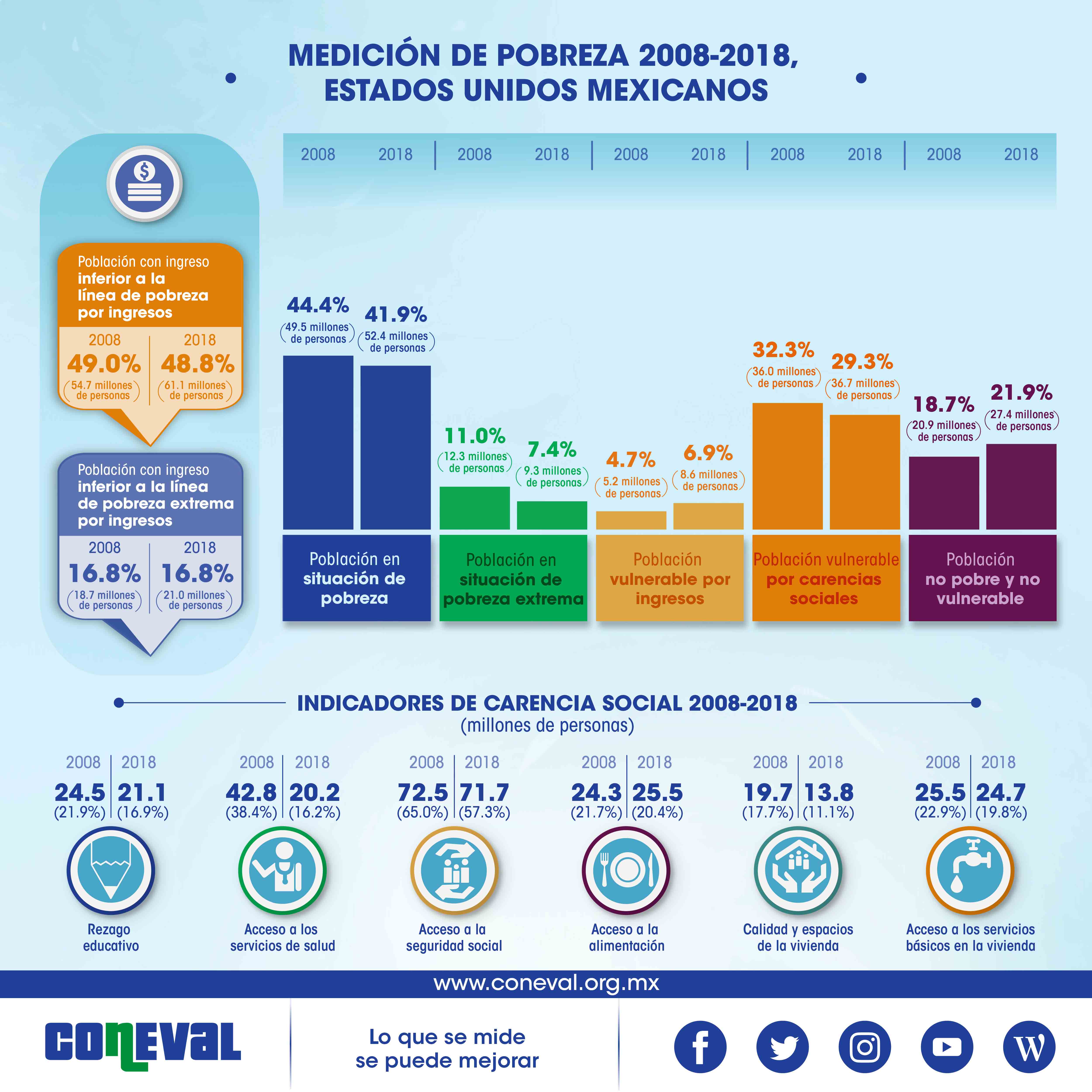
CONEVAL. (2018). Medicion de Pobreza 2008-2018. https://www.coneval.org.mx/Medicion/PublishingImages/Pobreza_2018/Serie_2008-2018.jpg
Connelly, R. & Zheng, Z. (2003). Determinants of school enrollment and completion of 10 to 18 year olds in China. Economics of Education Review, 22(4), 379–388. https://doi.org/10.1016/s0272-7757(02)00058-4
Creighton & Park, H. (2010). Closing the Gender Gap: Six Decades of Reform in Mexican Education. Comparative Education Review, 54(4), 513–537. https://doi.org/10.1086/653702
Creighton, Park, H. & Teruel, G. M. (2009). The Role of Migration and Single Motherhood in Upper Secondary Education in Mexico. Journal of Marriage and Family, 71(5), 1325–1339. https://doi.org/10.1111/j.1741-3737.2009.00671.x
Currie, J. & Goodman, J. (2020). The Economics of Education. Journal of the American Medical Association 290 2003, 239–248. https://doi.org/10.1016/b978-0-12-815391-8.00018-5
Fischer, C. S., Hout, M., Jankowski, M. S., Lucas, S. R., Swidler, A. & Voss, K. (2020). Inequality by Design, Cracking the Bell Curve Myth. https://doi.org/10.1354/books/unregistered/9780691221502
Fleischhauer, K.-J. (2007). A Review of Human Capital Theory: Microeconomics. SSRN Electronic Journal. https://doi.org/10.2139/ssrn.957993
Flouri, E. & Buchanan, A. (2004). Early father’s and mother’s involvement and child’s later educational outcomes. British Journal of Educational Psychology, 74(2), 141–153. https://doi.org/10.1348/000709904773839806
Glewwe, P. & King, E. M. (2001). The Impact of Early Childhood Nutritional Status on Cognitive Development: Does the Timing of Malnutrition Matter? The World Bank Economic Review, 15(1), 81–113. https://doi.org/10.1093/wber/15.1.81
Gould, G. S., Havard, A., Lim, L. L., Group, T. P. S. in P. E. & Kumar, R. (2020). Exposure to Tobacco, Environmental Tobacco Smoke and Nicotine in Pregnancy: A Pragmatic Overview of Reviews of Maternal and Child Outcomes, Effectiveness of Interventions and Barriers and Facilitators to Quitting. International Journal of Environmental Research and Public Health, 17(6), 2034. https://doi.org/10.3390/ijerph17062034
Guryan, J., Hurst, E. & Kearney, M. (2008). Parental Education and Parental Time with Children. Journal of Economic Perspectives, 22(3), 23–46. https://doi.org/10.1257/jep.22.3.23
Hauser, R. M. & Featherman, D. L. (1976). Equality of Schooling: Trends and Prospects. Sociology of Education, 49(2), 99. https://doi.org/10.2307/2112516
Haveman, R. & Wolfe, B. (1995). The Determinants of Children’s Attainments: A Review of Methods and Findings. Journal of Economic Literature, 33(4), 1829-1878.
Hertel, F. R. & Groh-Samberg, O. (2014). Class mobility across three generations in the U.S. and Germany. Research in Social Stratification and Mobility, 35, 35–52. https://doi.org/10.1016/j.rssm.2013.09.007
Holmlund, H., Lindahl, M. & Plug, E. (2011). The Causal Effect of Parents’ Schooling on Children’s Schooling: A Comparison of Estimation Methods. Journal of Economic Literature, 49(3), 615–651. https://doi.org/10.1257/jel.49.3.615
INEGI. (2010). Mujeres y hombres en México 2010. https://www.inegi.org.mx/contenidos/productos/prod_serv/contenidos/espanol/bvinegi/productos/integracion/sociodemografico/mujeresyhombres/2010/702825494193.pdf
INEGI. (2024). Tasa de abandono escolar por entidad federativa según nivel educativo, ciclos escolares seleccionados de 2000/2001 a 2023/2024. https://www.inegi.org.mx/app/tabulados/interactivos/?pxq=9171df60-8e9e-4417-932e-9b80593216ee
Jæger, M. M. (2012). The Extended Family and Children’s Educational Success. American Sociological Review, 77(6), 903–922. https://doi.org/10.1177/0003122412464040
Jere, B. & Hoddinott, J. (2001). Program Evaluation with Unobserved Heterogeneity and Selective Implementation: The Mexican Progresa Impact on Child Nutrition. SSRN Electronic Journal. https://doi.org/10.2139/ssrn.306121
Johnson, W. (2010). Understanding the Genetics of Intelligence. Current Directions in Psychological Science, 19(3), 177–182. https://doi.org/10.1177/0963721410370136
Kalmijn, M. (1994). Assortative Mating by Cultural and Economic Occupational Status. American Journal of Sociology, 100(2), 422–452. https://doi.org/10.1086/230542
King, V. & Elder, G. H. (1997). The Legacy of Grandparenting: Childhood Experiences with Grandparents and Current Involvement with Grandchildren. Journal of Marriage and the Family, 59(4), 848. https://doi.org/10.2307/353787
Korenman, S. & Winship, C. (2000). Meritocracy and Economic Inequality. 137–178. https://doi.org/10.1515/9780691190334-009
Korupp, S. E., Ganzeboom, H. B. G. & Lippe, T. V. D. (2002). Do Mothers Matter? A Comparison of Models of the Influence of Mothers’ and Fathers’ Educational and Occupational Status on Children’s Educational Attainment. Quality and Quantity, 36(1), 17–42. https://doi.org/10.1023/a:1014393223522
LaFave, D. & Thomas, D. (2017). Height and cognition at work: Labor market productivity in a low income setting. Economics & Human Biology, 25, 52–64. https://doi.org/10.1016/j.ehb.2016.10.008
Lam, C. B., McHale, S. M. & Crouter, A. C. (2012). Parent–Child Shared Time From Middle Childhood to Late Adolescence: Developmental Course and Adjustment Correlates. Child Development, 83(6), 2089–2103. https://doi.org/10.1111/j.1467-8624.2012.01826.x
Lankes, J. (2022). Negotiating “Impossible” Ideals: Latent Classes of Intensive Mothering in the United States. Gender & Society, 36(5), 677–703. https://doi.org/10.1177/08912432221114873
Lucas, S. R. (2023). Mare’s model of education transitions: Reflections on a powerful continuing resource for understanding. Research in Social Stratification and Mobility, 88, 100807. https://doi.org/10.1016/j.rssm.2023.100807
Maralani, V. (2023). Rob Mare’s legacy: The demography of inequality and social mobility. Research in Social Stratification and Mobility, 88, 100808. https://doi.org/10.1016/j.rssm.2023.100808
Mare, R. D. (1980). Social Background and School Continuation Decisions. Journal of the American Statistical Association, 75(370), 295–305. https://doi.org/10.1080/01621459.1980.10477466
Mare, R. D. (2011). A Multigenerational View of Inequality. Demography, 48(1), 1–23. https://doi.org/10.1007/s13524-011-0014-7
Mare, R. D. (2014). MULTIGENERATIONAL ASPECTS OF SOCIAL STRATIFICATION: ISSUES FOR FURTHER RESEARCH. Research in Social Stratification and Mobility, 35, 121–128. https://doi.org/10.1016/j.rssm.2014.01.004
Mare, R. D. & Chang, H.-C. (2006). Mobility and Inequality. 195–231. https://doi.org/10.1515/9781503625495-010
Marks, G. N. (2022). Cognitive ability has powerful, widespread and robust effects on social stratification: Evidence from the 1979 and 1997 US National Longitudinal Surveys of Youth. Intelligence, 94, 101686. https://doi.org/10.1016/j.intell.2022.101686
Martorell, R. & González‐Cossío, T. (1987). Maternal nutrition and birth weight. American Journal of Physical Anthropology, 30(S8), 195–220. https://doi.org/10.1002/ajpa.1330300511
McLanahan, S. & Percheski, C. (2008). Family Structure and the Reproduction of Inequalities. Annual Review of Sociology, 34(1), 257–276. https://doi.org/10.1146/annurev.soc.34.040507.134549
Milkie, M. A., Nomaguchi, K. M. & Denny, K. E. (2015). Does the Amount of Time Mothers Spend With Children or Adolescents Matter? Journal of Marriage and Family, 77(2), 355–372. https://doi.org/10.1111/jomf.12170
OECD. (2012). México – Nota País – Resultados de PISA 2012. https://www.oecd.org/content/dam/oecd/en/about/programmes/edu/pisa/publications/national-reports/pisa-2012/country-specific-overviews/PISA-2012-results-mexico-ESP.pdf
OECD. (2013). Education policy Outlook: Mexico. http://www.oecd.org/mexico/EDUCATION%20POLICY%20OUTLOOK%20MEXICO_EN.pdf
OECD. (2024). Education at a Glance 2024. Education at a Glance. https://doi.org/10.1787/7d21bd53-en
Parke, R. D. (2013). Gender Differences and Similarities in Parental Behavior. In W. B. W. and K. K. Kline. (Ed.), Gender and Parenthood: Biological and Social ScientificPerspectives (pp. 120–63). Columbia University Press,.
Parker, S. W., Rubalcava, L. & Teruel, G. (2007). Chapter 62 Evaluating Conditional Schooling and Health Programs. Handbook of Development Economics, 4, 3963–4035. https://doi.org/10.1016/s1573-4471(07)04062-4
Parker, S. W. & Todd, P. E. (2017). Conditional Cash Transfers: The Case of Progresa/Oportunidades. Journal of Economic Literature, 55(3), 866–915. https://doi.org/10.1257/jel.20151233
Perkins, J. M., Subramanian, S. V., Smith, G. D. & Özaltin, E. (2016). Adult height, nutrition, and population health. Nutrition Reviews, 74(3), 149–165. https://doi.org/10.1093/nutrit/nuv105
Pilishvili, T., Gierke, R., Fleming-Dutra, K. E., Farrar, J. L., Mohr, N. M., Talan, D. A., Krishnadasan, A., Harland, K. K., Smithline, H. A., Hou, P. C., Lee, L. C., Lim, S. C., Moran, G. J., Krebs, E., Steele, M. T., Beiser, D. G., Faine, B., Haran, J. P., Nandi, U., … Team, V. E. among H. P. S. (2021). Effectiveness of mRNA Covid-19 Vaccine among U.S. Health Care Personnel. The New England Journal of Medicine, 385(25), NEJMoa2106599. https://doi.org/10.1056/nejmoa2106599
Planillo, A. H. (2004). Abuelos, abuelas, nietos y nietas. El punto de vista infantil. Indivisa, Boletín de Estudios e Investigación, 5, 35–42. https://doi.org/10.37382/indivisa.vi5.388
Pong, S. & Chen, V. W. (2010). Co-resident Grandparents and Grandchildren’s Academic Performance in Taiwan. Journal of Comparative Family Studies, 41(1), 111–129. https://doi.org/10.3138/jcfs.41.1.111
Raven, J. (2000). The Raven’s Progressive Matrices: Change and Stability over Culture and Time. Cognitive Psychology, 41(1), 1–48. https://doi.org/10.1006/cogp.1999.0735
Rocha, M. M. y T. & Romero, C. R. (2003). Inequalities in Mexican Children’s Schooling*. Journal of Comparative Family Studies, 34(3), 435–454. https://doi.org/10.3138/jcfs.34.3.435
Schultz, T. P. (2002). Why Governments Should Invest More to Educate Girls. World Development, 30(2), 207–225. https://doi.org/10.1016/s0305-750x(01)00107-3
Shavit, Y. & Blossfeld, H. P. (1994). Persistent Inequality: Changing Educational Attainment in Thirteen Countries. British Journal of Educational Studies, 42(4), 413. https://doi.org/10.2307/3121687
Solon, G. (2018). What Do We Know So Far about Multigenerational Mobility? The Economic Journal, 128(612), F340–F352. https://doi.org/10.1111/ecoj.12495
Song, X. (2016). Diverging Mobility Trajectories: Grandparent Effects on Educational Attainment in One- and Two-Parent Families in the United States. Demography, 53(6), 1905–1932. https://doi.org/10.1007/s13524-016-0515-5
Strauss, J. & Thomas, D. (1995). Chapter 34 Human resources: Empirical modeling of household and family decisions. Handbook of Development Economics, 3, 1883–2023. https://doi.org/10.1016/s1573-4471(05)80006-3
Strauss, J. & Thomas, D. (1998). Health, Nutrition, and Economic Development. Journal of Economic Literature, 36(2), 766–817.
Strauss, J. & Thomas, D. (2007). Chapter 54 Health over the Life Course. Handbook of Development Economics, 4, 3375–3474. https://doi.org/10.1016/s1573-4471(07)04054-5
Thomas, D., Strauss, J. & Henriques, M.-H. (1990). Child survival, height for age and household characteristics in Brazil. Journal of Development Economics, 33(2), 197–234. https://doi.org/10.1016/0304-3878(90)90022-4
Torche, F. (2010). Economic Crisis and Inequality of Educational Opportunity in Latin America. Sociology of Education, 83(2), 85–110. https://doi.org/10.1177/0038040710367935
Victora, C. G., Adair, L., Fall, C., Hallal, P. C., Martorell, R., Richter, L., Sachdev, H. S. & Group, for the M. and C. U. S. (2008). Maternal and child undernutrition: consequences for adult health and human capital. The Lancet, 371(9609), 340–357. https://doi.org/10.1016/s0140-6736(07)61692-4
Voitchovsky, S. (2005). Does the Profile of Income Inequality Matter for Economic Growth? Journal of Economic Growth, 10(3), 273–296. https://doi.org/10.1007/s10887-005-3535-3
Wikle, J. & Cullen, C. (2023). The Developmental Course of Parental Time Investments in Children from Infancy to Late Adolescence. Social Sciences, 12(2), 92. https://doi.org/10.3390/socsci12020092
Zeng, Z. & Xie, Y. (2014). The Effects of Grandparents on Children’s Schooling: Evidence From Rural China. Demography, 51(2), 599–617. https://doi.org/10.1007/s13524-013-0275-4
Downloads
Published
Issue
Section
License
Copyright (c) 2025 Erika Arenas, Luis Rubalcava

This work is licensed under a Creative Commons Attribution-NonCommercial-NoDerivatives 4.0 International License.
LAER Copyright and License
Authors submitting articles to Latin American Economic Review (LAER), automatically grant this journal a license to publish. Copyright of all published material remains with the authors, who can reuse it in future work without needing to make reference to LAER. Similarly, any other contribution of material to the website (for example text, photographs, graphics, video or audio) automatically grants us a right to publish. Copyright, however, remains with the author(s).
Authors release their work under the Creative Commons Attribution-NonCommercial-NoDerivatives 4.0 International License (CC BY-NC-ND 4.0). This license allows anyone to copy, distribute and transmit the work, provided the use has no derivatives, is non-commercial and appropriate credit to the author(s) is given. (If you remix, transform, or build upon the material, you may not distribute the modified material.)
A human-readable summary of the licence:
https://creativecommons.org/licenses/by-nc-nd/4.0/
Full legal text: